
Clinical Comparison · Skin Quality
Profhilo vs Skin Boosters: What's the difference, and which one do you need?
A clear comparison of Profhilo against the leading skin booster systems — Restylane Skinboosters, Sunekos and Viscoderm Hydrobooster. How they differ, when each works best, and when more than one belongs in the same plan.
Profhilo vs Skin Boosters at a glance
The clinical comparison, side by side.
| Profhilo | Skin Boosters | |
|---|---|---|
| Category | Bioremodelling — its own class | Biorevitalisation — distributed hydration |
| Composition | 64 mg hybrid HA (high + low MW), no cross-linkers | Stabilised HA (Restylane, Viscoderm) or HA + amino acids (Sunekos) |
| Primary action | Stimulates collagen and elastin | Hydrates skin and supports extracellular matrix |
| Primary benefit | Firmness, skin quality, mild laxity | Hydration, glow, fine lines, texture |
| Injection technique | BAP (5 points per side) — spreads widely | Distributed micro-injections across treatment area |
| Sessions needed | 2 sessions, four weeks apart | 2–3 sessions, weekly to monthly |
| Onset of results | 30–60 days after 2nd session | Hydration visible within 1–2 weeks |
| Duration | 6–8 months | 4–6 months |
| Best treatment areas | Lower face, jawline, neck, décolleté, hands | Cheeks, around eyes, full face, neck, décolleté |
| Typical UK cost | From £299 per session | From £250 per session |
| Best for | Mild laxity, firmness, glow, lower-face quality | Hydration, fine lines, dull skin, early ageing |
What is Profhilo?
Profhilo is an injectable hyaluronic acid treatment that sits in its own clinical category — bioremodelling. It is not a filler, and although often grouped with skin boosters, it works through a fundamentally different mechanism.1
Profhilo contains 64 mg of pure hyaluronic acid per 2 ml syringe — one of the highest concentrations on the market — combining both high-molecular-weight and low-molecular-weight HA in stable hybrid complexes produced via a patented thermal process called NAHYCO® technology. Critically, no chemical cross-linking agents are used.1
Once injected using the Bio Aesthetic Points (BAP) technique — five strategic points on each side of the face — Profhilo gradually spreads through the dermis. Over 30–60 days, it stimulates the skin's own production of collagen and elastin.2 The result is improved firmness, skin tightness, and a marked improvement in skin quality. Patients describe the result as a glow rather than a change in shape.
A worldwide post-marketing safety review of more than 40,000 patients treated with Profhilo confirmed a strong safety profile.1
What are Skin Boosters?
Skin Boosters is an umbrella term for a family of injectable treatments that improve skin quality through deep dermal hydration. Unlike fillers, they do not add volume or contour — they restore moisture, support the extracellular matrix (ECM), and improve overall skin texture and glow.
At GlowMedix Clinic, we work with three leading Skin Booster systems — Restylane Skinboosters, Sunekos, and Viscoderm Hydrobooster — alongside Profhilo. Each has a specific clinical role.
Why patients ask about all of them
Profhilo and Skin Boosters are often confused because they all sit in the "skin quality" category. But mechanistically, they're addressing different problems. Profhilo targets laxity and firmness through bioremodelling and collagen stimulation. Restylane Skinboosters and Viscoderm target hydration and texture through dermal moisture restoration. Sunekos targets matrix support through HA combined with amino acids.
For many patients, the most natural-result, comprehensive plan involves a combination — Profhilo for the lower face and jawline, Sunekos for around the eyes, Restylane Skinboosters across the cheeks. The treatments complement each other rather than compete. If you're also considering injectables that relax movement, see our Botox vs Profhilo comparison.
The Five Key Differences
Where Profhilo and Skin Boosters actually differ
Boiled down to the five differences that matter clinically.
What they actually do
Profhilo stimulates collagen and elastin production through bioremodelling. Skin Boosters hydrate the skin and support the extracellular matrix. Profhilo firms; Skin Boosters hydrate. They affect different layers of skin biology.
Composition and concentration
Profhilo uses 64 mg of hybrid HA — uniquely high concentration with no cross-linkers. Restylane Skinboosters and Viscoderm use stabilised HA. Sunekos combines HA with amino acids. Four different formulations, four different mechanistic emphases.
Injection technique
Profhilo uses the BAP protocol — five points on each side of the face, designed to allow the highly mobile product to spread evenly. Skin Boosters use distributed micro-injections across the treatment area. The Profhilo protocol is faster and uses fewer injection points.
Treatment schedule
Profhilo requires just 2 sessions four weeks apart, with maintenance every 6 months. Skin Boosters typically need 2–3 sessions weekly to monthly, with maintenance every 4–6 months. Profhilo is generally the lighter overall schedule.
Where they work best
Profhilo's strongest results are on the lower face, jawline, neck, décolleté and hands. Skin Boosters work across more areas including around the eyes, cheeks, and finer skin areas where distributed delivery is preferred.
Profhilo firms. Skin Boosters hydrate. Most patients want both.
Brand Comparison
Profhilo vs Restylane Skinboosters
The bioremodeller versus the original skin booster — two different categories, two different goals.
Restylane Skinboosters (Vital, Vital Light) are the original skin boosters and remain among the most widely used hydrating injectables worldwide. They use NASHA™-stabilised hyaluronic acid — a proprietary cross-linking technology — delivered as small micro-deposits across the treatment area. The HA holds water in the dermis, gradually improving hydration, smoothness, and elasticity over a course of sessions. Studies have shown injectable HA skin boosters can improve skin hydration and elasticity by over 30% within 12 weeks.3
Profhilo uses hybrid HA without cross-linkers, and a completely different technique. Where Restylane Skinboosters use distributed micro-injections to create a hydrating reservoir within the dermis, Profhilo uses just five BAP points per side and relies on the product's natural spread and its bioremodelling effect to stimulate collagen and elastin production over 30–60 days.
The result is a different patient experience and a different outcome. Restylane Skinboosters produce a relatively quick hydration and texture improvement, typically visible within 1–2 weeks and built across 3 monthly sessions. Profhilo produces a slower, deeper change in skin quality — firmness and tightness — visible from around day 30 and consolidated by the second session four weeks later.
Our Clinical View
If your skin is dehydrated, dull, or showing texture changes — Restylane Skinboosters. If your concern is mild laxity, lower-face firmness, or jawline definition — Profhilo. They can be combined within the same overall plan. Read more about Profhilo treatment options on our signature treatments page.
Brand Comparison
Profhilo vs Sunekos
Hyaluronic acid alone, or hyaluronic acid plus the building blocks of collagen?
Sunekos is classified as a biorevitalisation treatment. What sets it apart from the other skin boosters is its formulation — Sunekos combines low-molecular-weight hyaluronic acid with a patented mix of six amino acids (the specific building blocks of collagen and elastin). The amino acid component means Sunekos does not just hydrate the dermis; it directly supports fibroblast activity and the regeneration of the extracellular matrix at a cellular level.
This makes Sunekos particularly effective in two scenarios where Profhilo is less suited: periorbital skin (around the eyes, where Profhilo's BAP technique cannot be safely used because the spreading product can affect orbital structures), and early signs of ageing in younger patients who don't yet have laxity but want to support skin quality preventatively.
Profhilo wins on the lower face and for patients with mild laxity, with fewer sessions required. Sunekos wins around the eyes, for early-stage ageing, and for patients who want amino acid–driven cellular support alongside hydration. Some patients use both — Profhilo for the lower face, Sunekos around the eyes, in the same overall plan.
Our Clinical View
Periorbital concerns (under-eye fine lines, dull eye-area skin) — Sunekos. Mild lower-face laxity or jawline firmness — Profhilo. Early prevention in patients in their 20s and early 30s — Sunekos is an excellent starting point.
Brand Comparison
Profhilo vs Viscoderm Hydrobooster
Two HA-based bioremodellers — one engineered to spread, the other engineered to stay put.
Viscoderm Hydrobooster is sometimes grouped with Profhilo because both sit in the IBSA-developed family of bioremodellers using NAHYCO® technology. Both use hybrid hyaluronic acid; both stimulate skin quality improvements. But the engineering of the product — and the technique used — are deliberately different.
Viscoderm Hydrobooster is specifically formulated for dynamic facial areas — the perioral region, the periorbital region, and the forehead — where constant muscle movement creates fine dynamic lines. The product is more stretch-resistant and is placed in small, targeted micro-boluses along specific lines. It is excellent for the fine vertical lines above the upper lip ("barcode lines"), crow's feet, and dynamic forehead lines that have not yet become deep static wrinkles.
Profhilo, by contrast, is engineered to spread widely. It is the better choice for overall facial firmness and lower-face quality. Viscoderm Hydrobooster is the better choice for fine, dynamic lines in mobile areas. They are complementary, not competing — many patients have Profhilo for overall facial firmness and Viscoderm Hydrobooster for specific perioral or periorbital lines.
Our Clinical View
Fine dynamic lines around the mouth, eyes, or forehead — Viscoderm Hydrobooster. Overall facial firmness, lower-face or jawline quality — Profhilo. For comprehensive skin quality plans, both are often combined within a single protocol.
Choosing Between Them
Which one is right for you?
A starting framework — final treatment plans are decided in clinical consultation with Dr Hassan or Rabia.
Dr Syed H Hassan
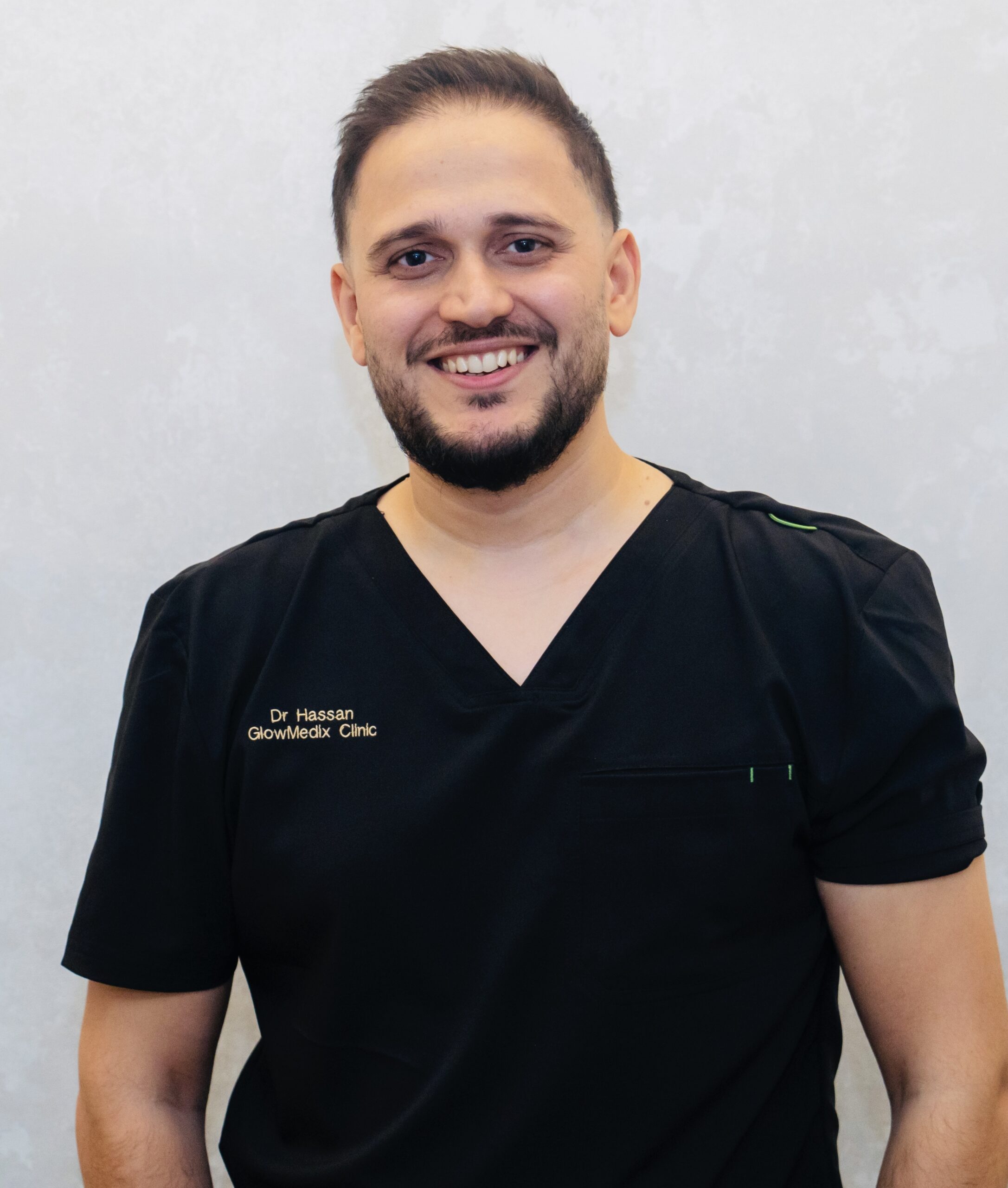
Dr Hassan is an experienced Private GP with a special interest in regenerative and aesthetic medicine. As Medical Director of GlowMedix Clinic, he oversees every treatment plan across all three London locations and ensures the highest clinical-safety standards are maintained — particularly in skin quality treatments where mechanism, technique, and protocol selection drive outcomes.
"The best result is when someone says 'you look well' — not 'what have you had done.' That is always the goal." Read more about the team.
Frequently Asked Questions
Common questions about Profhilo and Skin Boosters
Profhilo is a bioremodelling treatment using ultra-pure hybrid hyaluronic acid that spreads through the dermis to stimulate collagen and elastin production — primarily improving skin firmness and laxity. Skin Boosters (Sunekos, Restylane Skinboosters, Viscoderm Hydrobooster) are hydrating injectables placed in micro-deposits across the face to deliver hyaluronic acid (and in Sunekos's case, amino acids) directly into the dermis — primarily improving hydration, fine lines and overall glow. Profhilo firms; Skin Boosters hydrate.
Profhilo is sometimes described as the most advanced "next-generation skin booster", but technically it is classified as a bioremodelling treatment — a category of its own. It uses higher-concentration hybrid hyaluronic acid and a different injection technique (BAP — five points per side) compared to traditional Skin Boosters which use distributed micro-injections.
Profhilo focuses on firmness and skin quality through collagen stimulation via bioremodelling. Restylane Skinboosters focus on deep dermal hydration and texture improvement through stabilised HA micro-deposits. Restylane Skinboosters typically need 3 monthly sessions then maintenance every 4–6 months; Profhilo needs 2 sessions four weeks apart then maintenance every 6 months. Choose Profhilo if firmness is the primary concern. Choose Restylane Skinboosters if hydration and texture are the priority.
Profhilo is generally better for mild skin laxity, deeper bioremodelling, and patients seeking firmness improvement with fewer injections. Sunekos is generally better for early signs of ageing, fine lines, dehydration, and patients wanting cellular-level extracellular matrix support via the amino acid component. Sunekos is also particularly suited to the periorbital area where Profhilo's BAP protocol cannot be safely used. Many patients use both — alternating courses depending on what their skin needs at the time.
Both Profhilo and Viscoderm Hydrobooster are NAHYCO®-technology bioremodellers from IBSA, but they're engineered for different purposes. Profhilo uses 64mg hybrid HA delivered via the BAP protocol (5 points per side) and is engineered to spread — best suited to the lower face, jawline, neck and décolleté. Viscoderm Hydrobooster uses stretch-resistant hyaluronic acid placed in small targeted micro-boluses along specific dynamic lines — best for perioral lines, periorbital lines, and forehead lines where constant movement creates fine dynamic wrinkles. Profhilo firms overall; Viscoderm targets specific dynamic-line areas. They're often used together in the same plan.
Neither is universally "better" — they treat different problems. Profhilo is better if the concern is firmness, mild laxity, or overall skin quality of the lower face. Skin Boosters (Restylane, Sunekos, Viscoderm) are better if the concern is hydration, fine lines, texture, or specific dynamic-line areas. The right answer depends entirely on the patient's skin and goals, which is why a proper consultation is the first step.
Profhilo requires 2 sessions, four weeks apart, then maintenance every 6 months. Restylane Skinboosters typically require 3 sessions monthly, then maintenance every 4–6 months. Sunekos typically requires 2–4 sessions, weekly to fortnightly. Viscoderm Hydrobooster typically requires 2–3 sessions three weeks apart. Profhilo's schedule is generally the lightest overall.
Yes — combination protocols are common. Many patients alternate between courses or layer them in the same plan. For example, Profhilo for the lower face and jawline, with Sunekos around the eyes, Restylane Skinboosters across the cheeks, and Viscoderm Hydrobooster for perioral lines. The treatments work via complementary mechanisms and do not interfere with each other.
At GlowMedix Clinic, Profhilo starts from £299 per session (a course of two is usually recommended for first-time patients). Restylane Skinboosters, Sunekos and Viscoderm Hydrobooster start from £250 per session. Costs vary by area treated and specific product. See also our Botox vs Profhilo comparison for context on injectable treatment options.
All four treatments — Profhilo, Sunekos, Restylane Skinboosters and Viscoderm Hydrobooster — have well-established safety profiles. A worldwide post-marketing safety review of more than 40,000 patients treated with Profhilo demonstrated a strong safety profile.1 Common side effects across all four are limited to mild bruising, swelling or tenderness at injection sites, typically resolving within 24–72 hours.
References
Clinical references
- Beatini A, Schiraldi C, Sparavigna A. Safety Assessment of High- and Low-Molecular-Weight Hyaluronans (Profhilo®) as Derived from Worldwide Postmarketing Data. Clin Cosmet Investig Dermatol. 2020;13:441–451. PMC7327616
- Stellavato A, La Noce M, Corsuto L, et al. Hybrid Complexes of High and Low Molecular Weight Hyaluronans Highly Enhance HASCs Differentiation: Implication for Facial Bioremodelling. Cell Physiol Biochem. 2017;44(3):1078–1092. PubMed
- Sparavigna A, Tenconi B. Efficacy and tolerance of an injectable medical device containing stable hybrid cooperative complexes of high- and low-molecular-weight hyaluronic acid: a monocentric 16 weeks open-label evaluation. Clin Cosmet Investig Dermatol. 2016;9:297–305. PMC5042196
- Sparavigna A, Tenconi B, De Ponti I. Antiaging, photoprotective, and brightening activity in biorevitalization: a new solution. Clin Cosmet Investig Dermatol. 2015;8:57–65. PMC4321416